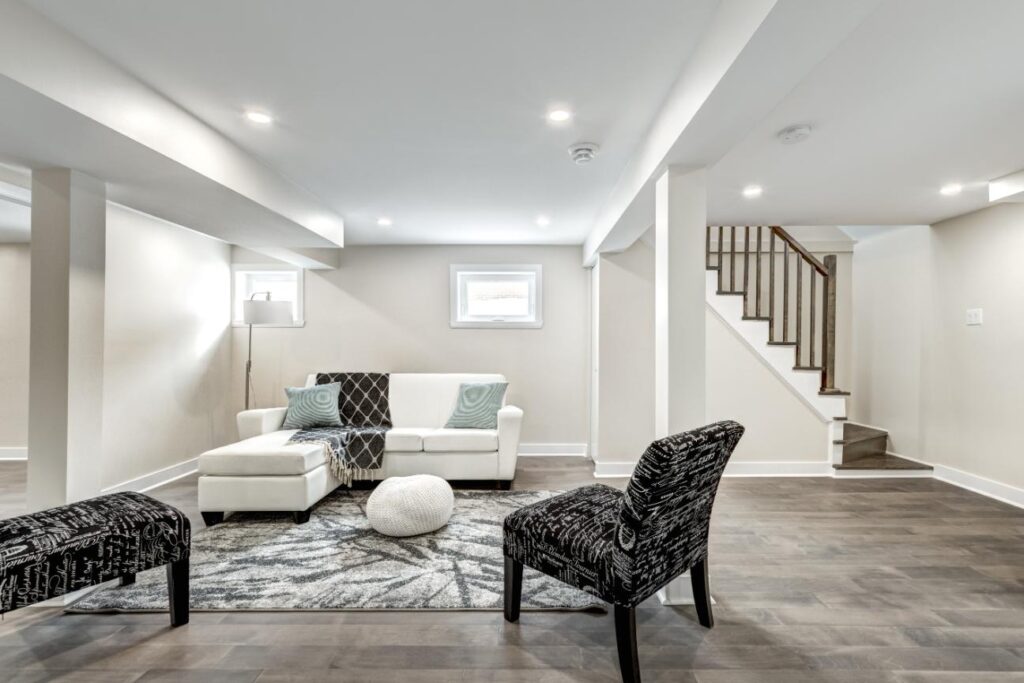
Most Wilmington homes have a basement that turned into storage such as seasonal bins and old furniture. A finished basement gives you real square footage you can use every day, without changing your home’s footprint. It can also improve resale appeal by converting underused space into a functional living area.
Basement remodeling isn’t the same as finishing an upstairs room during a typical home remodel in Wilmington. Below-grade spaces demand smarter planning around moisture control, insulation, ventilation, and local building requirements. When the prep is done correctly, a basement can feel like a natural extension of the home.


Signs Your Basement Needs a Remodel
Excess humidity can lead to mold growth behind finished walls if it isn’t addressed before construction starts. A proper remodel begins with identifying where moisture is coming from and reducing it using solutions such as improved ventilation.
Bare concrete stays cold because it’s in constant contact with the ground. If foundation walls are uninsulated, the room can feel chilly in winter and clammy in summer. Better insulation approaches can make the space feel like an upstairs room instead of an underground zone.
Cracks in basement walls or floors can be cosmetic and uneven floors make furniture placement awkward and can create trip hazards. Our basement finishing contractor in Wilmington, DE evaluates cracks and surface conditions early so repairs and leveling can be handled before finished flooring is installed.
Full-Service Basement Remodeling Services in Wilmington, DE
A basement remodel works best when it’s treated as a full system such as layout, comfort, moisture control, electrical needs, and finishing details all working together.
Basements come with constraints like support posts, mechanical systems, stairs, and limited natural light. Our home improvement contractor makes smart layouts work around what can’t move and still create a clean flow. Framing also creates spaces for insulation and hides wiring and plumbing while giving the structure needed for finished walls and doors.
Basements need insulation strategies that support comfort while reducing condensation risk. Sound control is also important. If the basement will be used as a theater, gym, or play area. The right wall and ceiling assemblies reduce noise transfer between floors and help the basement feel quieter and more private.
Basement flooring should be selected for moisture resistance, durability, and comfort. Popular options include luxury vinyl plank (LVP), carpet, tile, epoxy coatings. Choosing flooring isn’t just about appearance but it’s about matching materials to how the space will be used.
Finished basements need more than basic wiring. A remodel often includes recessed lighting for even coverage, switched lighting zones, dedicated circuits for equipment-heavy spaces (theaters, gyms, gaming setups) and code-appropriate protection in areas where moisture might be present.
If you want a basement bathroom, wet bar, or laundry area, plumbing planning is essential. Below-grade plumbing can require additional work depending on existing drain elevations and the home’s layout. This is why plumbing is best decided during the design phase, so that walls, floor work, and finishes aren’t disrupted later.

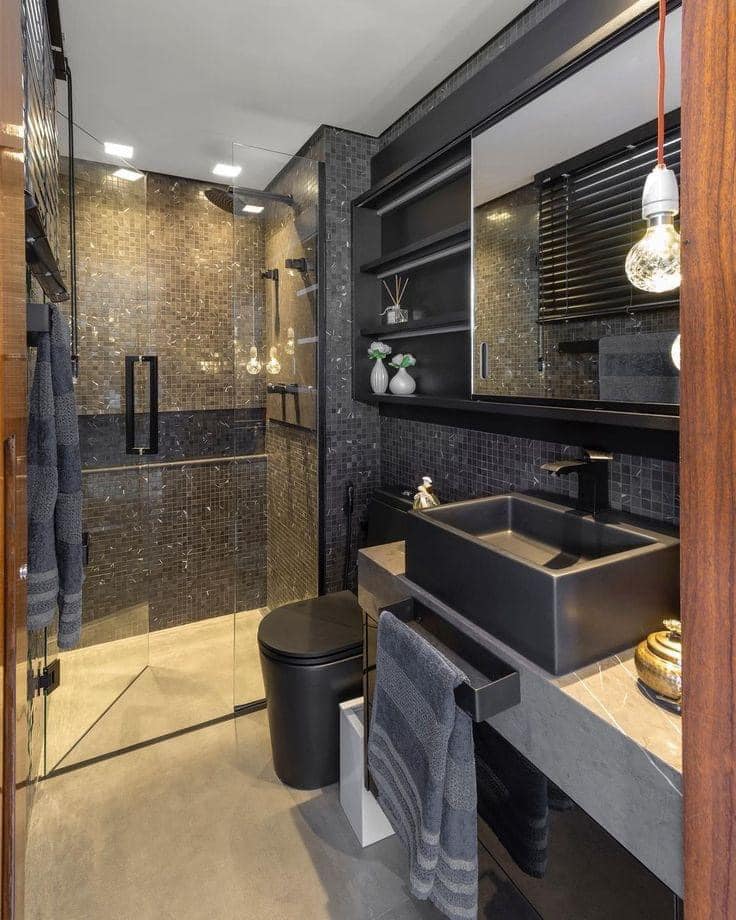
Basement Bathroom Addition Services in Wilmington, DE
Adding a bathroom boosts convenience and long-term flexibility. A half bath supports entertaining and daily use. A full bath supports guest space or a future bedroom/in-law-style layout.
Basement ceilings can be finished in different ways depending on budget and access needs:
Clean look that matches upstairs finishes.
Easier access to pipes and wiring.
A modern, industrial approach that keeps mechanicals accessible.
Built-in storage, closets, and under-stair areas keep storage without letting it dominate the space. Common upgrades include:
- Under-stair storage rooms or closets
- Built-in shelving for seasonal items
- Linen closets for basement bathrooms
- Hidden storage zones that preserve a clean look
Trim, doors, and paint create the final polish:
- Bright wall colors to offset limited natural light
- Durable trim and baseboards
- Interior doors for privacy and sound control
- Clean transitions between rooms and functional zones
Basement Upgrade Specialists in Wilmington, DE
A basement becomes most valuable when it has a purpose. These are some of the most requested upgrades homeowners chosen:
Basements naturally work well for theaters because light control is easier and outside noise is reduced. Popular features include:
- Layered lighting (recessed + dimmable control)
- Speaker and media wiring planned in advance
- Sound management between basement and upstairs
- A feature wall for screens, cabinetry, or built-ins
The key is designing the room around viewing angles, seating, and audio—so it performs like a real media space.
A dedicated gaming room keeps consoles, screens, and gear out of main living areas. Good gaming spaces often include:
- Strong outlet and data placement
- Comfortable lighting choices (bright for board games, ambient for screens)
- Storage for games and equipment
- Seating layout that fits the room (not just what looks good online)
A basement gym saves time and membership fees, but it needs thoughtful planning:
- Flooring that protects equipment and reduces vibration
- Ventilation to keep air fresh during workouts
- Enough power for treadmills or other machines
- Storage for weights, mats, and accessories
A bar or wet bar turns the basement into an entertainment hub. Depending on scope, it may include:
- Base cabinets and durable countertops
- Sink and plumbing for easy cleanup
- Beverage fridge and storage
- Lighting that highlights the bar area
- Optional seating and feature finishes
Even a compact wet bar can make the basement feel like a destination space for gatherings.

Our Basement Remodeling Process
A clear process keeps projects predictable and reduces stress. Here’s our Basement renovation process:
1) Consultation and Measurements
The first step is understanding how you want to use the space, measuring the basement, reviewing the condition of walls and floors, and identifying any moisture or foundation concerns. This phase helps determine what prep work is needed before finishing begins.
2) Design and Material Selections
Planning includes layout, lighting zones, outlet placement, and any plumbing needs. Material choices typically include flooring, wall finishes, ceiling approach, trim style, colors, and specialty-room features.
3) Detailed Estimate
A clear estimate explains what’s included and how costs are built—labor, materials, permits, and any prep work required. Transparent scopes reduce surprises and help homeowners prioritize what matters most.
4) Permits and Code Requirements
Many basement projects require permits, especially when adding walls, electrical work, plumbing, or bedrooms (egress requirements may apply). Proper inspections at key stages help ensure the project meets current standards.
5) Build Phase
Work typically progresses in the correct order: prep work first, then framing, then rough-ins, then insulation and drywall, followed by finishes. This sequence protects quality, prevents rework, and ensures systems are installed properly before walls close.
6) Finishing and Final Install
Flooring, paint, trim, lighting fixtures, doors, and plumbing fixtures are completed. Final details are handled so the basement feels complete, consistent, and ready to use.
7) Final Walkthrough
You review the finished space, confirm systems work as expected, and note any final adjustments. A good contractor wraps up with a clean finish, clear expectations, and support for post-project questions.
Why Choose B&B Contracting for Basement Remodeling in Wilmington DE
- Planning-first remodeling that prevents costly mid-project changes
- Communication that keeps you updated as work progresses
- Jobsite protection and cleanup so your home stays livable during construction
- Clear scope and change management so costs don’t drift unexpectedly
- Workmanship backed by warranty coverage for additional peace of mind
FAQs
Moisture is a common concern in local basements, especially in older homes. Basement remodeling often includes moisture control solutions such as waterproofing, proper drainage, and improved ventilation to help keep the space dry and comfortable long term.
Yes, permits are usually required for basement remodeling, especially when adding electrical, plumbing, walls, or living space. We assist with handling permits and ensure all work meets local building codes and inspection requirements throughout Wilmington and New Castle County.
Yes, with the right preparation. Older basements may need structural evaluation, updated wiring, or moisture solutions before finishing. Addressing these issues during remodeling helps ensure the space is safe, comfortable, and code compliant.
Yes. Basement bathrooms are common, but they require careful plumbing planning and proper ventilation. We will evaluate drainage options and design the bathroom for long-term moisture control.
Basement remodeling costs in Wilmington vary widely depending on the condition of the space and what you want to do with it. Simple finishes like flooring, lighting, and paint are more affordable, while full renovations with new walls, bathrooms, electrical updates, and waterproofing cost more. Older homes in Wilmington often need extra work on moisture control and utilities, which can affect pricing. You’ll get a clear estimate before work starts.